0 readers
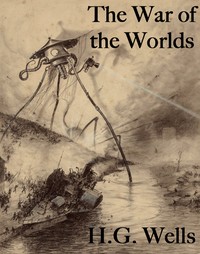
The War of the Worlds
by H.G. Wells
Category: History
Status: Available
Source: Public Domain — Project Gutenberg
About This Book
"The War of the Worlds" by H. G. Wells is a science fiction novel written between 1895 and 1897. When Martians with superior intelligence and advanced weapons invade Earth, humanity faces extinction. The extraterrestrials emerge from metal cylinders, wielding devastating heat rays and toxic chemical weapons as they methodically destroy England's defenses. An unnamed narrator struggles to survive the carnage and reunite with his wife while civilization collapses around him. One of the earliest alien invasion stories, Wells's novel explores humanity's vulnerability against an unstoppable force. (This is an automatically generated summary.)
About the Author
English · 1866–1946
He wrote some of the first great science fiction stories. The Time Machine and The War of the Worlds are among his most famous works.
Preview
Loading preview...
About This Edition
This edition of The War of the Worlds is sourced from Project Gutenberg, the world's oldest digital library of public domain literature, founded in 1971 by Michael Hart. Project Gutenberg houses over 70,000 freely available e-books whose copyrights have expired in the United States, and every text has been verified to be free of copyright restrictions.
On Libreya, the text has been carefully formatted for comfortable reading on any screen — with consistent chapter navigation, adjustable font sizes, and four reading themes: light, sepia, dark, and night mode. Your reading position is saved automatically when you sign in, so you can pick up exactly where you left off across any device. The original text has not been altered in any way; what you read here is the same work as it appeared in its original published form.
About Classic Historical Writing
Classical historical writing is both a source of information and a form of literature in its own right, and the best historical texts deserve to be read as both. The great historians of antiquity — Thucydides, Herodotus, Livy, Tacitus — were also artists, shaping their accounts of wars, cities, and empires with conscious craft and a clear point of view. Reading these texts is to experience history not as a dry catalogue of dates and events but as a narrative shaped by interpretation, rhetoric, and the perspective of the person recording it. Later historical works — from Gibbon's monumental Decline and Fall of the Roman Empire to the first-hand accounts of explorers, soldiers, and statesmen — occupy the fertile territory between literature and scholarship, offering information that is inseparable from the particular mind that observed and recorded it. Classic historical texts are invaluable as primary sources: they reveal not only what happened, but how people at the time understood what was happening around them.